
 DE
 IT
STEP MOTOR
CONTROLS
Stepper Motor Controllers for Machines and Systems –
small – robust – simple
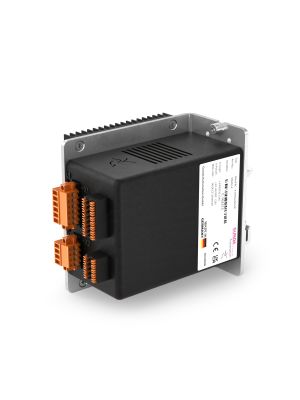
Our stepper motor controllers enable controlled movement and precise positioning of stepper motors in machines and systems. The product line includes the Colibri-C BAC 50, BAC 100, and the MiniPAC 4.0. You can select the appropriate stepper motor controller based on the drive, control task, and required interface.
The separate controllers offer flexibility in combining the motor and electronics. Their compact design allows for space-saving installation within the machine or in the control cabinet. Various control concepts are available, ranging from control via digital signals and clock/direction to integration via Industrial Ethernet.
Stepper Motor Controllers at a Glance
Our stepper motor controllers cover a range of current and voltage levels. The BAC 50 and BAC 100 offer solutions for classic control and positioning tasks. The MiniPAC 4.0 rounds out the product line with a positioning controller featuring Industrial Ethernet interfaces.
Configure and purchase our stepper motor controllers as standalone units
Configure and purchase directly in the store, including models with Industrial Ethernet & fieldbus
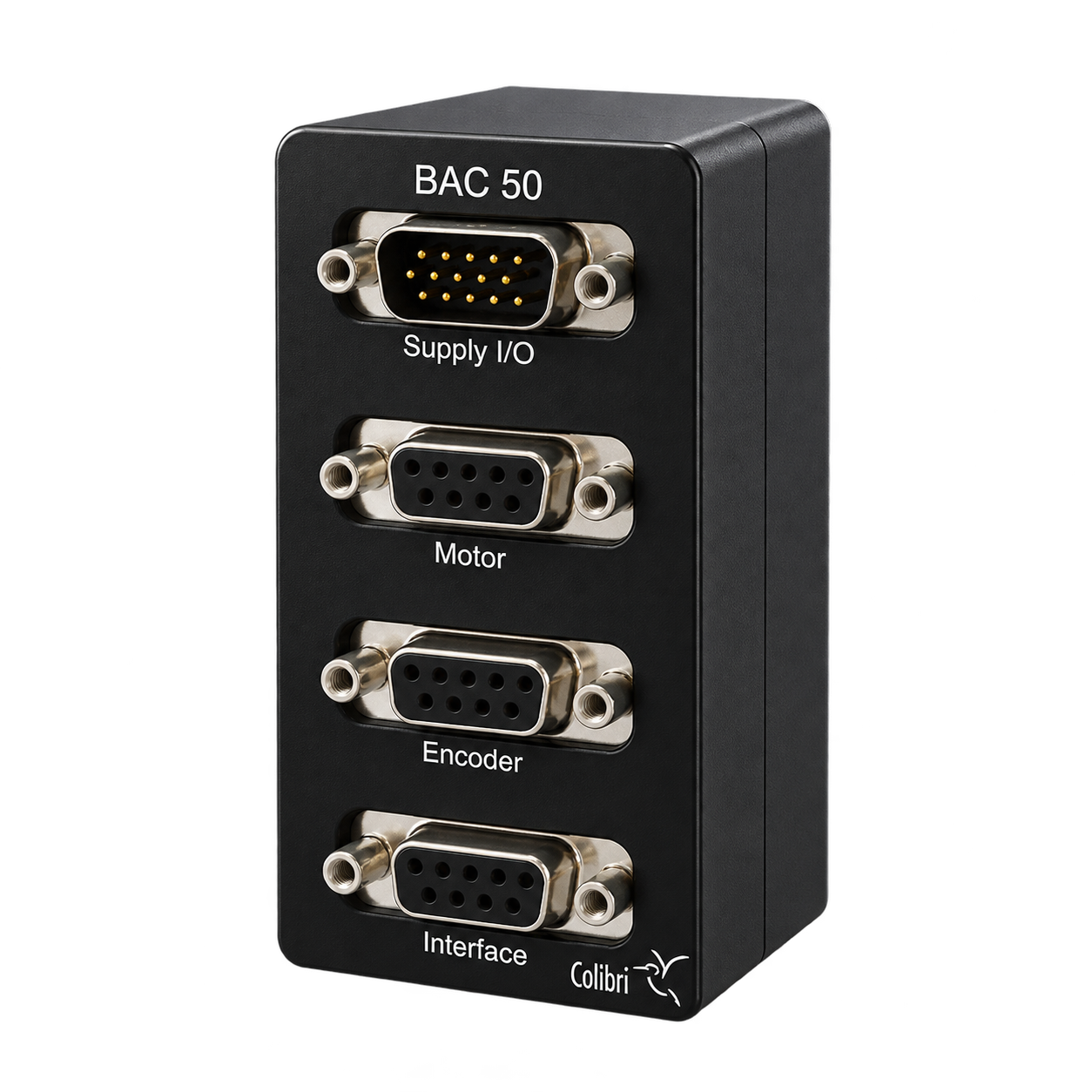
BAC 50
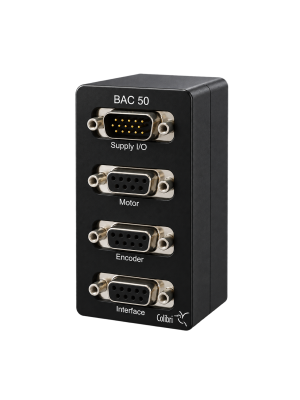
Compact single-axis stepper motor controller up to 3 A
- Adjustable phase current up to 3 A
- Motor supply: 24–48 VDC
- Control voltage: 24–36 VDC
- Control: Digital I/O or pulse/direction
- Incremental encoder connection: 5 V, RS422 with A/Ā and B/B̄ signals
The BAC 50 is suitable for compact drive applications with a phase current of up to 3 A. Depending on the model, stored motion profiles can be recalled, or movements can be specified via a higher-level controller.


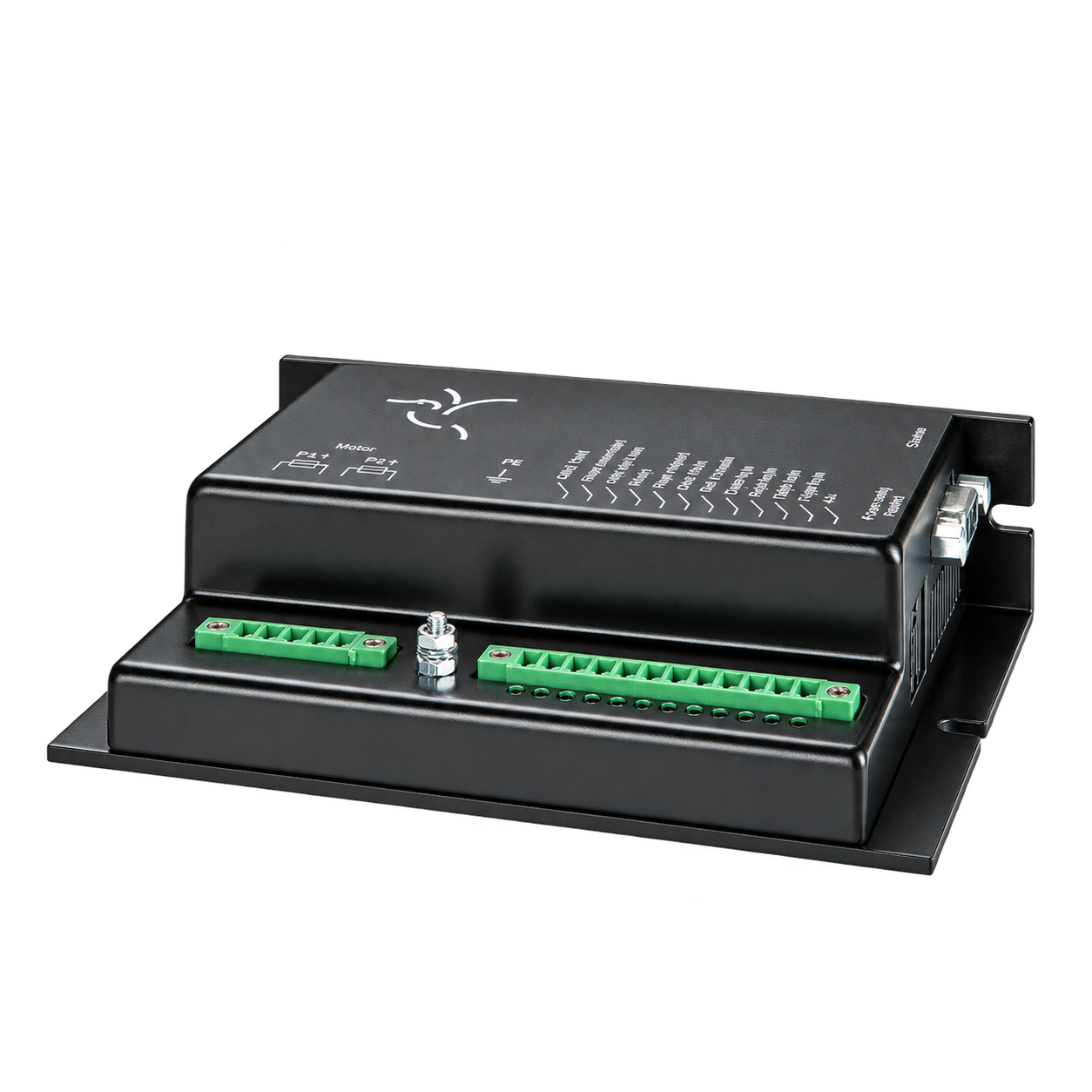
BAC 100
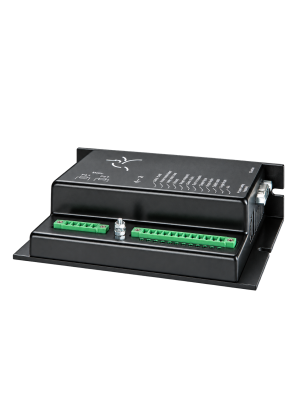
High-performance single-axis stepper motor controller up to 10 A
- Adjustable phase current up to 10 A
- Motor supply: 24–60 VDC
- Control voltage: 24–36 VDC
- Control: Digital I/O or pulse/direction
- Incremental encoder connection: 5 V, RS422 with A/Ā and B/B̄ signals
The BAC 100 offers a solution for stepper motors with higher current requirements. Different operating modes allow for adaptation to positioning tasks and existing machine controls.
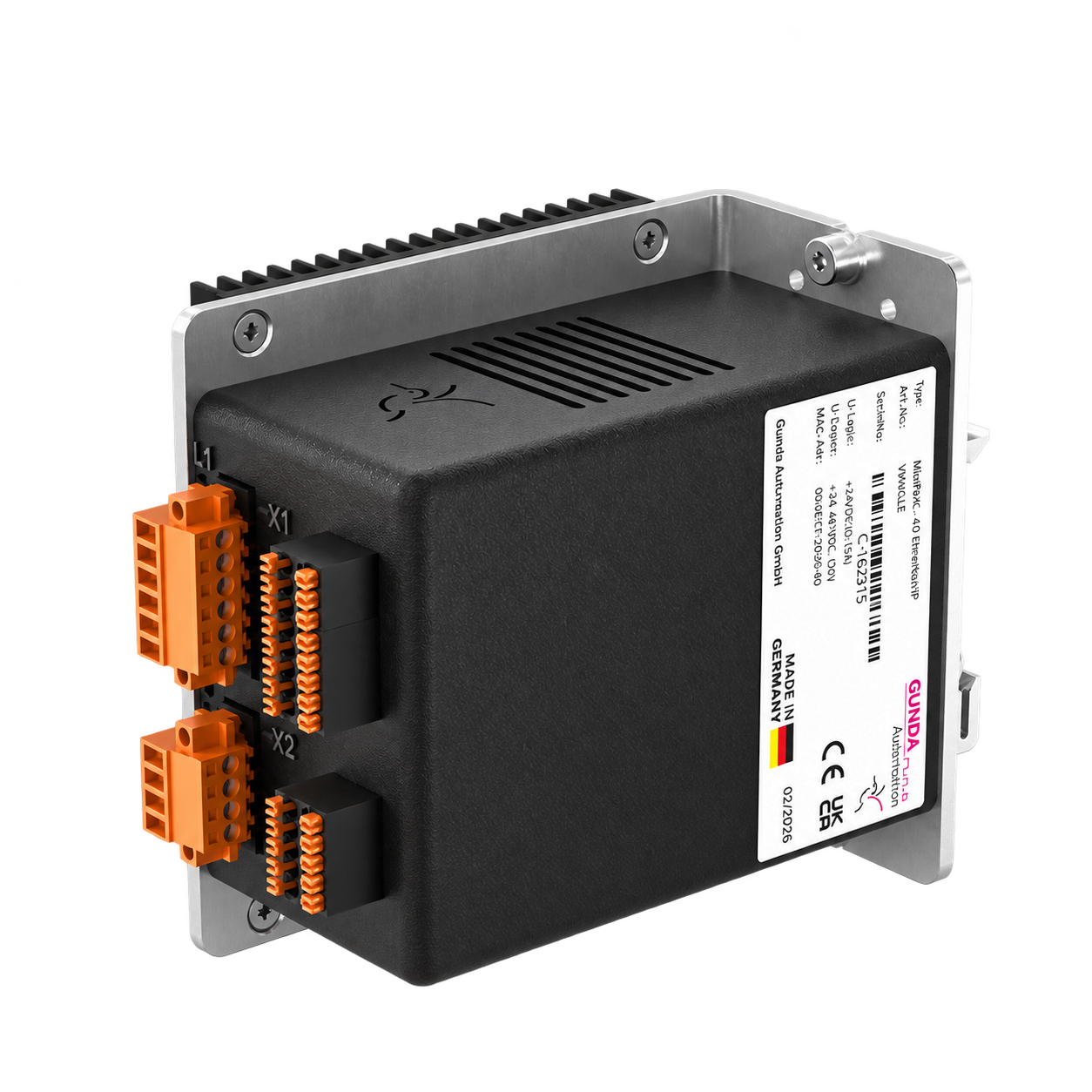
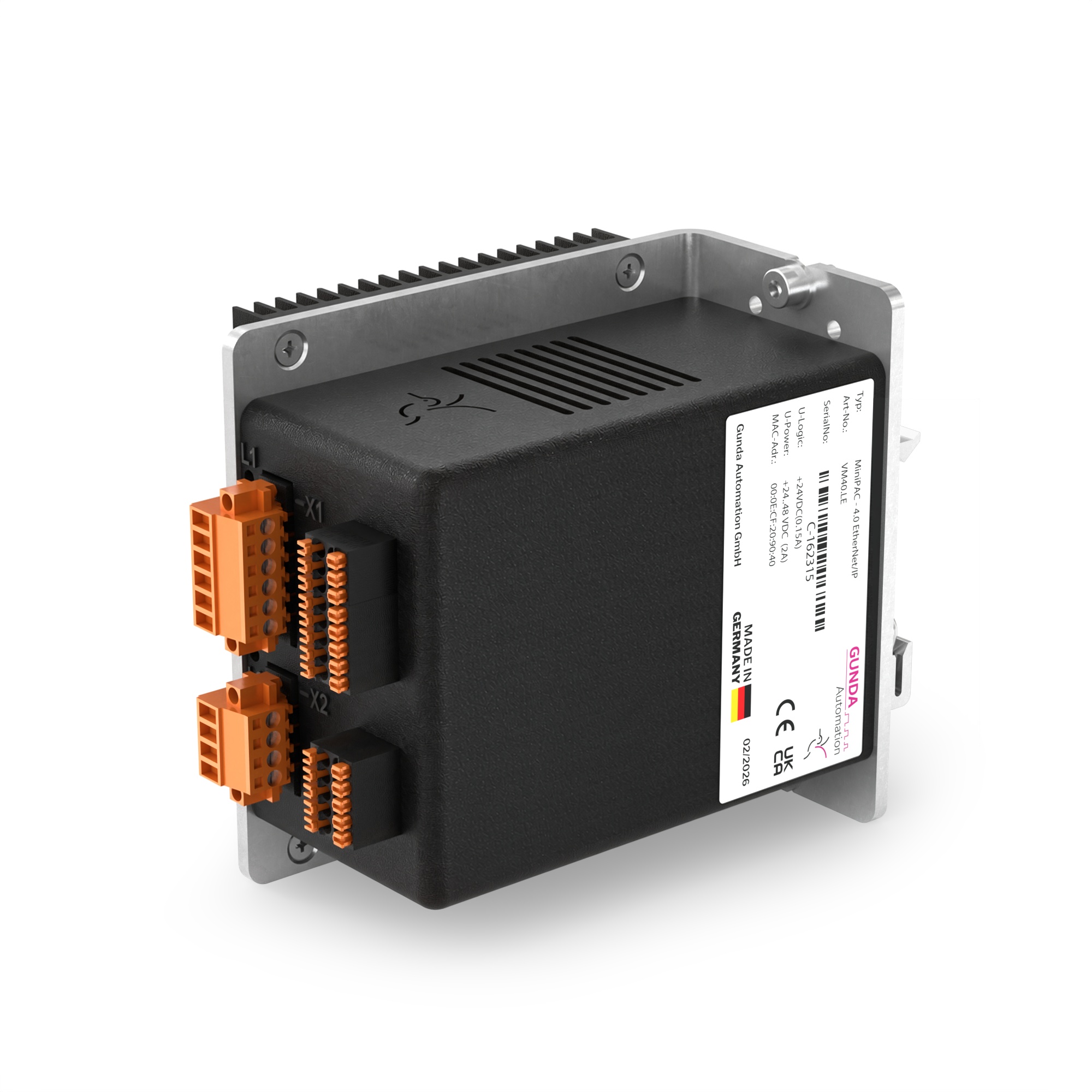
MiniPAC 4.0
Stepper Motor Controller with Industrial Ethernet
- Adjustable phase current up to 10 A RMS
- Motor supply: 24–48 VDC
- Separate logic supply: 24 VDC
- Industrial Ethernet: PROFINET, EtherCAT, EtherNet/IP
- Encoder interfaces: RS422 and SSI
- Configuration via Ethernet TCP/IP or USB
The MiniPAC 4.0 combines a drive and a positioning controller in a single compact device. Included libraries and function blocks simplify integration into industrial PLC and automation systems.

BAC—How Our Simplest Controller Works
GUNDA Automation’s BAC stepper motor controllers combine position control and a power amplifier into a single compact unit. The Windows software allows for convenient adjustment of travel paths, speeds, and acceleration and deceleration ramps. Saved motion profiles can be selected and started via digital inputs or linked to form an automatic sequence. Integrated reference runs, print mark positioning, and analog speed and position setpoints enable versatile adaptation to the application. Alternatively, the BAC processes cycle and direction signals from a higher-level controller—for precise motion sequences in positioning, conveying, and dosing systems.
GUNDA AUTOMATION
BAC · Satzwahl und Satzablauf erleben
Zuerst referenzieren, dann gespeicherte Positionen anfahren. Die SPS steuert die BAC über digitale Signale. Der Motor liefert seine Position über den Encoder an die BAC zurück.
DIGITAL I/O
Digitale Rückmeldungen Warten auf Referenzfahrt
Digitale I/O
SPS DO → E1LOW
SPS DO → E2LOW
SPS DO → STARTLOW
Rückmeldungen zur SPS
SPS DI ← Motor stehtHIGH
SPS DI ← BereitLOW

GUNDA
BAC
BAC
Encoderposition erfassen Nicht referenziert
Antrieb &
Rückmeldung
Rückmeldung
Motoransteuerung
Encoder A / B
ENCODER
eingeschalteter Spannung erfasst Stillstand
Fahrprogramm · Satzwahl
| Adresse | Kommando | Ziel | Anwahl |
|---|---|---|---|
| 5 | Referenzfahrt | Sensor | Erster START |
| 11 | Fahre Absolut | 120° | E1 |
| 12 | Fahre Absolut | 240° | E2 |
| 13 | Fahre Absolut | 0° | E1 + E2 |
Encoder → BAC 100
Kanal A
Kanal B
90° elektrischer Phasenversatz.Position und Richtung werden in der BAC erfasst.
Position & Auftragszustand
Encoderposition in der BACNicht referenziert
Nächster AuftragReferenzfahrt
BewegungStillstand
Bereit ist LOW.
E1/E2 HIGH = blau, START HIGH = grün, Rückmeldungen HIGH = magenta. START bleibt während der Fahrt gesetzt. Fehlerquittierung durch Zurücknehmen von START. Position und bestehende Referenz bleiben erhalten. Betriebsart wechseln oder Demo zurücksetzen startet das Beispiel neu. Schematische Demo ohne Hardwareverbindung; A/B-Signalbild ohne Zeitmaßstab.
Seamless communication between PLC and drive via Industrial Ethernet
Our controllers connect your PLC to the drive: motion commands are transmitted via the bus interface and executed precisely. Feedback on position and operating status enables the higher-level controller to monitor motion sequences and trigger subsequent machine steps in a targeted manner. This significantly reduces the load on the PLC, as the calculations for positioning—as well as the reading of encoder signals—are performed in the MiniPAC stepper motor controller. The following animation clearly illustrates this data exchange.
GUNDA AUTOMATION
Einfache Befehle. Transparente Rückmeldung.
Die SPS gibt Zielposition und Geschwindigkeit vor. MiniPAC 4.0 steuert den Antrieb, wertet die Encoder-Signale aus und liefert die Istinformationen über Industrial Ethernet zurück.
FAHRAUFTRAG
Industrial
Ethernet
Ethernet
Fahrbefehl
Istinformationen

MiniPAC 4.0
Antrieb &
Rückmeldung
Rückmeldung
Motoransteuerung
Encoder A / B
ENCODER
1 · SPS sendet Fahrbefehl
Befehl
Absolut positionieren
2 · Encoder liefert A/B-Signale
Kanal A
Kanal B
Phasenversatz
90° elektrisch
Auswertung
Position & Richtung
3 · MiniPAC meldet an die SPS
Istposition
0,0°
Istgeschwindigkeit
0,0°/s
Status
Bereit
Fehler
Kein Fehler
Zielposition und Geschwindigkeit auswählen,
dann den Fahrbefehl senden.
Schematische Funktionsdemo ohne Hardwareverbindung. Das Encoder-Signalbild zeigt gleichmäßige A/B-Impulse mit 90° Phasenversatz und bleibt beim Stillstand stehen. Die horizontale Achse ist keine Zeitmessung. Telegramme, Statuswerte und mechanische Zuordnung sind beispielhaft.
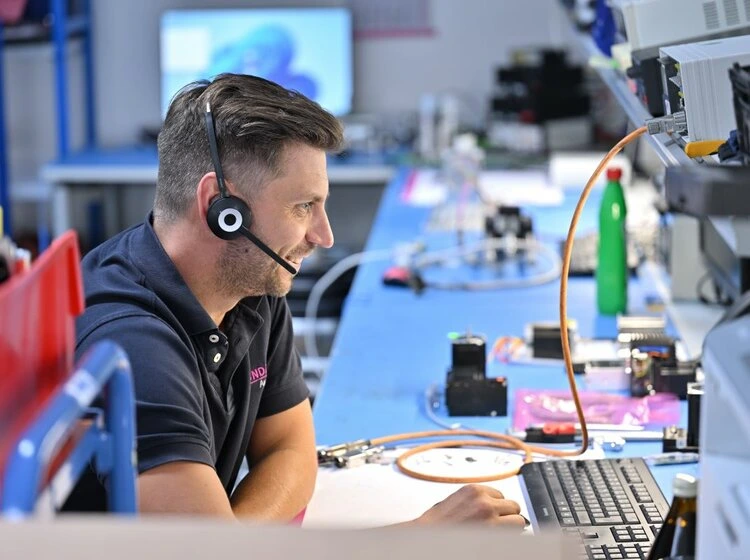
Which stepper motor controller is right for your application?
Whether it’s the BAC50/BAC100, our MiniPAC 4.0, or a custom-designed special version—we’ll help you select the right solution for your application.
Our entire team is dedicated to developing innovative stepper motor controllers for your benefit.
Put us to the test!
Send me your inquiry—we’d be happy to assist you with your project.
Typical Applications for Our Stepper Motor Controllers
Our stepper motor controllers enable precise motion and positioning tasks in machines and systems. Typical applications include:
- Automation technology: Positioning and moving workpieces, tools, and machine axes.
- Packaging and Conveyor Technology: Controlling feed mechanisms, transport movements, and repetitive positioning sequences.
- Dosing technology: Controlled operation of pumps and dosing mechanisms.
- Laboratory and instrumentation technology: Precise positioning of samples, adjustment devices, and handling systems.
The BAC 50 and BAC 100 can be connected to a PLC via digital I/O or clock/direction signals. The MiniPAC 4.0 enables integration via PROFINET, EtherCAT, or EtherNet/IP. This allows you to select the right stepper motor controller for your power requirements, positioning task, and machine control.
ADVANTAGES OF OUR STEP MOTOR CONTROLLERS
Compact Design
Our stepper motor controllers combine the drive stage and positioning functions in a single compact unit. This saves installation space and simplifies integration into machines and control cabinets.
Flexible Control
Tailored to your machine design: The BAC controllers offer digital inputs and outputs as well as clock/direction signals. The MiniPAC 4.0 enables connectivity via PROFINET, EtherNet/IP, or EtherCAT.
The Right Power
From the compact BAC 50 with up to 3 A phase current to high-performance controllers with up to 10 A: You choose the right solution for your stepper motor and your application.
Versatile positioning functions
Depending on the operating mode, the BAC controllers support stored motion profiles, program sequences, and print mark control. This allows various motion tasks to be implemented directly within the controller.
Easy Configuration
With Colibri Studio, you can conveniently configure the BAC 50, BAC 100, and MiniPAC 4.0 on a PC. Motion parameters, positions, and motion sequences can be precisely adjusted. Diagnostic functions and test runs simplify commissioning—the connection is established via the respective device interface and, if necessary, a suitable interface converter.
Prepared for Encoders
Encoder connections enable the integration of position signals. In addition to the encoder connections of the BAC series, the MiniPAC 4.0 supports both incremental and absolute encoders.
Our stepper motor controllers integrated into the motor as a smart, complete solution
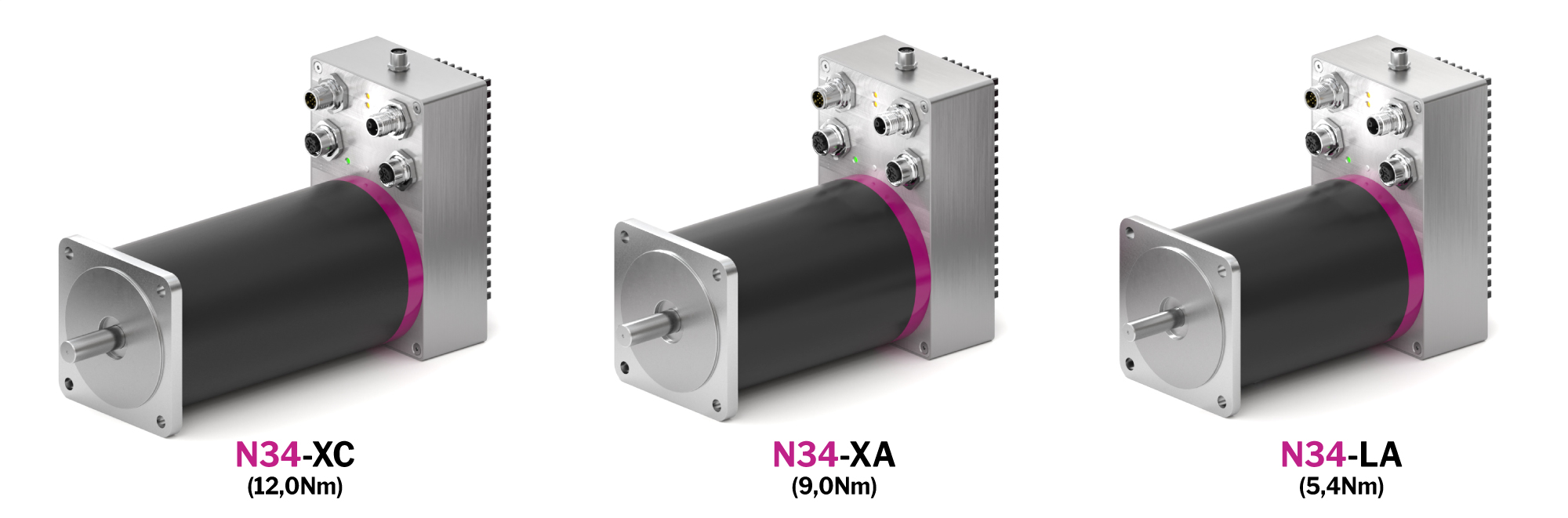
Our integrated stepper motors combine the motor, positioning controller, and power electronics into a single compact unit. They enable precise positioning tasks and repetitive motion sequences in modern machines and automation systems.
With the controller integrated directly into the motor, they reduce wiring effort, save space in the control cabinet, and simplify the setup of decentralized drive systems. They thus offer a compact alternative to the combination of a separate stepper motor and an external controller.
Properly Sizing Stepper Motors with the MotorFinder
The MotorFinder from GUNDA Automation helps you design stepper motor drives, axis systems, and complete drive solutions. Using real motion data as well as defined masses and forces, you can size the appropriate stepper motor—serving as the basis for selecting a suitable stepper motor controller.
In just a few steps, you can enter the axis system, motion profile, and load data. The tool then calculates suitable stepper motors and clearly displays the results in a torque-speed curve. Based on this, the motor and controller can be matched in terms of motor current, supply voltage, and application requirements.
In addition, the MotorFinder enables the analysis of accelerations, speeds, and motion profiles, as well as the design of suitable drive solutions—optionally including gearboxes.
With time-distance diagrams, project management, and PDF export, the MotorFinder supports technical project planning in mechanical engineering and industrial automation.
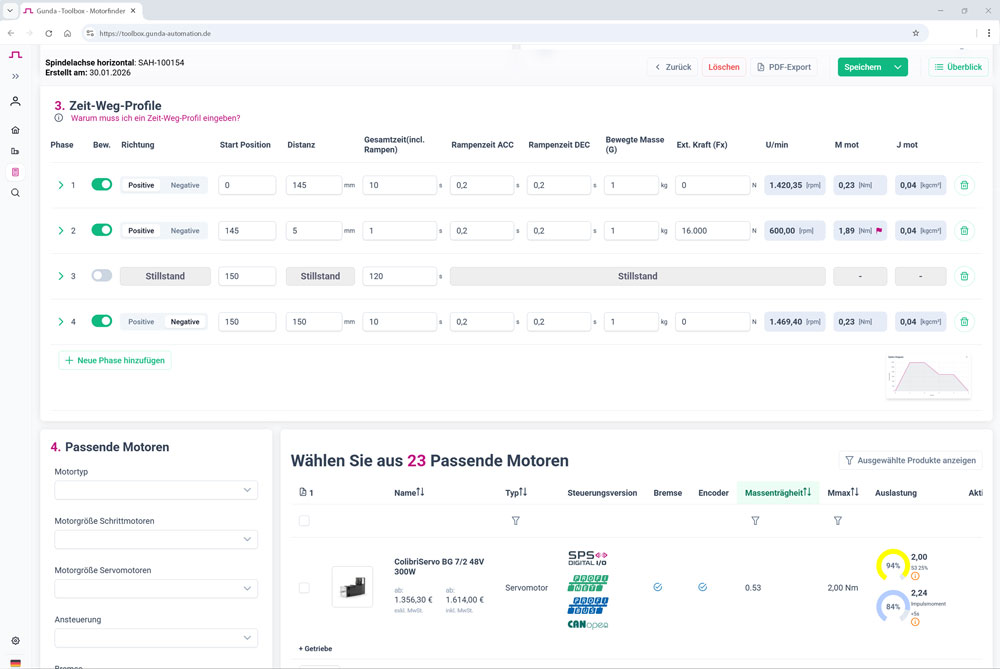
Get started online now
Open MotorFinder in the Toolbox and create a robust design in just a few minutes—including visualization, load capacity, and export.
Go to MotorFinderColibri Studio 4.0
Configuration & Diagnostics for Colibri Drive Systems
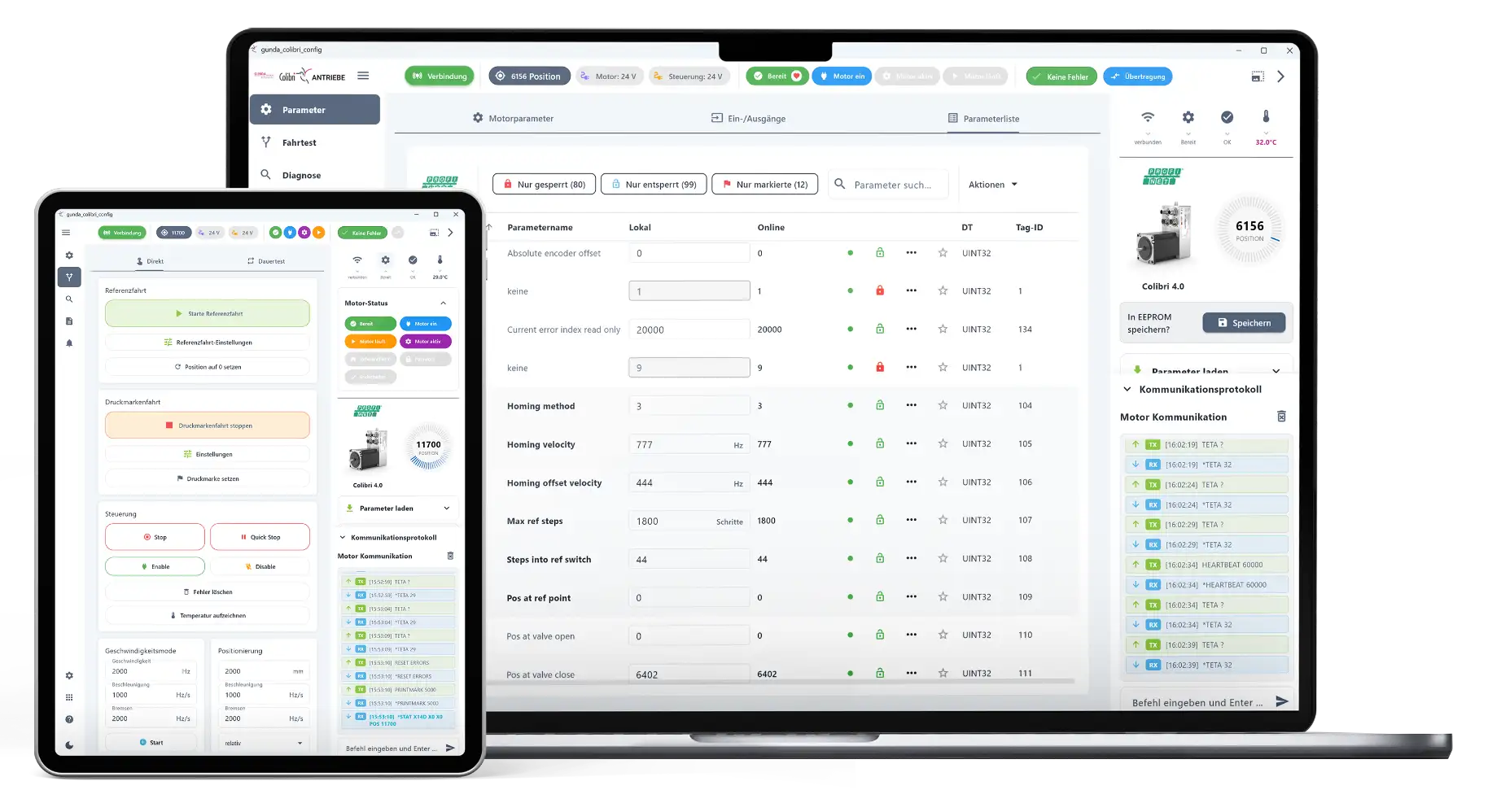
Colibri-Studio is free software for the industrial configuration, parameterization, and diagnostics of Colibri stepper motor controllers. Devices can be quickly connected via Ethernet or USB, parameters can be adjusted as needed, and configurations can be saved.
Ideal for mechanical engineering, service, and development, enabling efficient commissioning, reproducible device states, and structured motion tests in daily B2B use. Software from Ravensburg, Upper Swabia.
Frequently Asked Questions About Our Stepper Motor Controllers
Here you’ll find answers regarding selection, PLC integration, configuration, and operation of the BAC 50, BAC 100, and MiniPAC 4.0.
How do I select the right stepper motor controller?
The key factors are motor phase current, supply voltage, desired control method, encoder connection, and installation conditions. The BAC 50 offers an adjustable phase current of up to 3 A, while the BAC 100 offers up to 10 A. Depending on the model, both support digital I/O or clock/direction control. The MiniPAC 4.0 offers up to 10 A RMS and is suitable for applications with Industrial Ethernet or SSI absolute encoders. All three models control one stepper motor axis each.
What distinguishes the BAC 50, BAC 100, and MiniPAC 4.0?
The models differ primarily in terms of motor current, supply voltage, interfaces, and connections. The BAC 50 and BAC 100 offer digital I/O or clock/direction control, as well as optional RS485. The BAC 50 operates with up to 3 A phase current and a 24–48 VDC motor supply, while the BAC 100 operates with up to 10 A and 24–60 VDC. The MiniPAC 4.0 offers up to 10 A RMS at 24–48 VDC as well as PROFINET, EtherCAT, or EtherNet/IP, and supports incremental and SSI absolute encoders.
How can the stepper motor controllers be connected to a PLC?
Depending on the model, the BAC 50 and BAC 100 can be connected to a PLC via digital inputs and outputs or clock/direction signals. With digital block selection, the PLC selects a stored motion command and starts it via the START input. The MiniPAC 4.0 enables connection via PROFINET, EtherCAT, or EtherNet/IP. Included libraries and function blocks simplify its PLC integration.
How are the BAC 50, BAC 100, and MiniPAC 4.0 configured?
The BAC 50, BAC 100, and MiniPAC 4.0 can be configured on a PC using Colibri Studio. Motion parameters, positions, and motion sequences can be set, and diagnostic functions and test runs can be utilized. The connection is established via the respective device interface; for BAC devices, a suitable interface converter is used if necessary. For the MiniPAC, the PC connection is established via Ethernet TCP/IP or USB, depending on the interface variant.
What is a stepper motor controller?
A stepper motor controller regulates the current supply to the motor phases and thus controls the movement of a stepper motor. Our devices combine a power amplifier and a positioning controller in a single compact unit. Depending on the model and operating mode, they process external motion specifications or execute stored motion commands.
What supply voltages do the controllers require?
The BAC 50 requires 24–36 VDC for the logic and 24–48 VDC for the motor. For the BAC 100, the logic supply is also 24–36 VDC, and the motor supply is 24–60 VDC. The MiniPAC 4.0 uses a separate 24 VDC logic supply and a 24–48 VDC motor supply.
Can the motor current be adjusted to suit the application?
Yes. The phase current is adjustable up to 3 A for the BAC 50, up to 10 A for the BAC 100, and up to 10 A RMS for the MiniPAC 4.0. The BAC 50 and BAC 100 also offer adjustable current reduction during standstill. The settings must be appropriate for the connected motor, the application, and the thermal installation conditions.
Can motion profiles be stored in the BAC 50 and BAC 100?
Yes. In the digital I/O version, up to 31 motion profiles can be stored for block selection. These can be selected via five binary-coded inputs and executed by pressing START. Alternatively, a stored program sequence can be run in block sequence mode.
What is the difference between block selection and block sequence?
In block selection, the PLC selects a stored motion command via binary-coded inputs and starts it by pressing START. The positions can be selected in any order. In "Block Execution," the programmed commands are executed in the specified order. Depending on the motion program, a new START signal triggers the next command, or appropriately configured commands continue automatically.
How does the START signal work with BAC controllers?
In the standard configuration, START is held HIGH throughout the entire motion. If START is withdrawn prematurely, the drive stops and the motion command is not fully executed. Edge detection can change this behavior depending on the parameter settings. For PLC control, therefore, the configured START evaluation is decisive.
What feedback signals do the BAC 50 and BAC 100 send to the PLC?
The digital outputs “Ready” and “Motor Stopped” inform the PLC about the operating and motion status. “Motor Stopped” is HIGH when the motor is at a standstill. In an application requiring a reference run, “Ready” remains LOW until the reference run is successfully completed. During subsequent positioning, “Ready” must remain HIGH throughout the entire movement. Only the completed motion command, together with an error-free execution, confirms successful positioning; “Motor Stopped” alone does not mean that the target position has been reached.
What happens if a motor blockage is detected?
When rotational monitoring via encoder is active, a detected blockage or step error causes the drive to stop. The “Ready” output goes LOW, signaling to the PLC that the positioning was not successfully completed. In the described block selection mode, the error is acknowledged by canceling the START command. After a successful reference run, “Ready” returns to HIGH, and a new positioning operation is possible. The position detected by the encoder is retained as long as power is on.
How does clock/direction control work?
The higher-level controller specifies the motion via clock pulses and a direction signal. The BAC 50 and BAC 100 process these signals directly in the corresponding configuration. In this operating mode, full step, half step, quarter step, and eighth step are adjustable.
What other operating modes do the BAC 50 and BAC 100 offer?
In addition to block selection and block execution, the BAC controllers in the digital I/O version support reference runs, print mark positioning, and analog speed and position setpoints. In print mark positioning, a sensor signal influences the positioning sequence. Speed or position can be specified via an external analog signal.
Which encoders can be connected?
The BAC 50 and BAC 100 provide a connection for 5-V incremental encoders with differential A/A and B/B signals. The MiniPAC 4.0 supports incremental encoders via RS422 and absolute encoders via SSI. The encoder must be compatible with the electrical interface and pinout of the respective device.
For which stepper motor controllers is STO available?
The STO (Safe Torque Off) safety function is available as an option for the MiniPAC 4.0. Connection, function, and integration are described in the accompanying documentation.
What should be considered regarding installation and heat dissipation?
The controllers must be installed according to their installation instructions. For the BAC 50 and BAC 100, a suitable mounting surface for heat dissipation is required; heat-insulating mounting is not permitted. The device-specific installation and cooling instructions must also be followed for the MiniPAC 4.0.

Filter
Shopping Options
-
![MiniPac Stepper Motor Controller]()
Stepper Motor Control
Version: 4.0For Industrial Ethernet interfaces
Adjustable motor current up to: 10A
Motor voltage: 24–48 VDC
Control options: Profinet, EtherNet/IP, EtherCAT, or CANopen
Enclosure: Control cabinet
Safety: STO (optional)Learn More

 Show price€399.00Exkl. 19% Steuern€474.81Inkl. 19% Steuernzzgl. Versandkosten
-
![BAC 100 Stepper Motor Controller, 10 A, 1 Axis]()
Stepper Motor Controller
Version: BAC 100Control via digital I/O or clock/direction
Integrated motion program memory
Motor current adjustable up to: 10A
Motor voltage: 24–60 VDC
Enclosure: Control cabinetLearn More Show price€380.00Exkl. 19% Steuern€452.20Inkl. 19% Steuernzzgl. Versandkosten
-
![Small 3 A stepper motor controller with integrated program memory]()
Stepper Motor Controller
Version: BAC 50Control via digital I/O or clock/direction
Integrated motion program memory
Motor current adjustable up to: 3A
Motor voltage: 24–48 VDC
Enclosure: Control cabinetLearn More
Show price€280.00Exkl. 19% Steuern€333.20Inkl. 19% Steuernzzgl. Versandkosten