

 DE
DE
 IT
IT
STEP MOTORS
WITH INTEGRATED CONTROL
Stepper Motors with Integrated Control –
All-in-one stepper motors
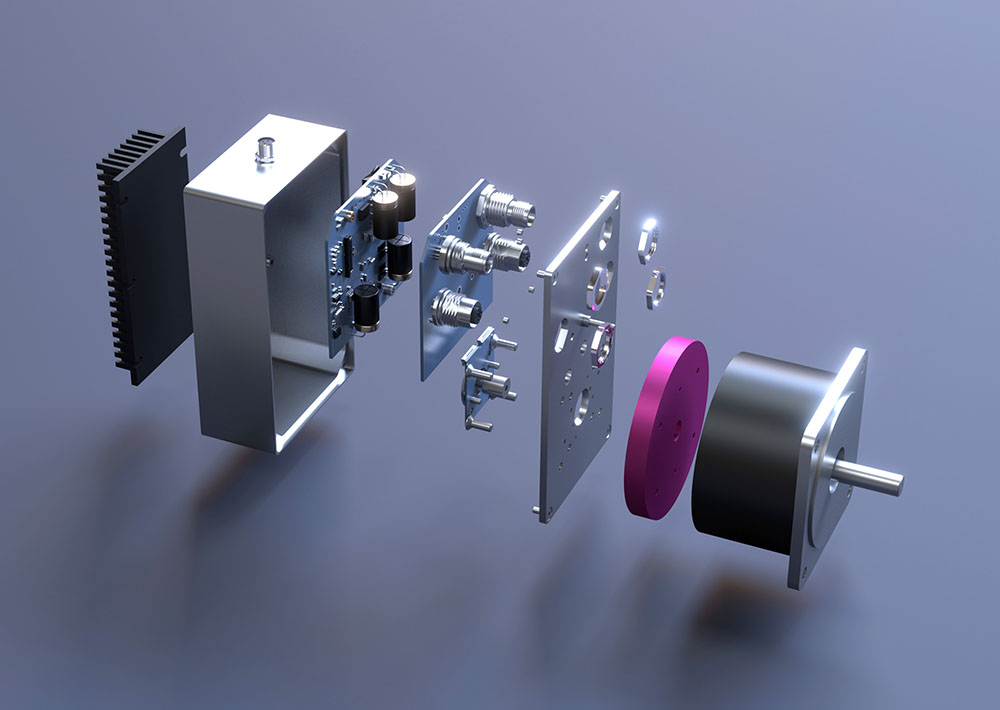
Our stepper motors with integrated control combine the motor, power electronics, and positioning control into a compact, all-in-one solution housed in a single enclosure. Compared to traditional systems with separate stepper motor controllers, these integrated stepper motors reduce wiring effort, save space in the control cabinet, and enable significantly faster commissioning.
Colibri decentralized stepper motors were specifically developed for industrial automation, mechanical engineering, and precise positioning tasks. Rugged M12 connectors, Industrial Ethernet interfaces, and easy configuration via USB or Ethernet using the Colibri-CFG software ensure rapid integration into modern machine and automation concepts.
Comparison of Stepper Motors with Integrated Controllers
Our stepper motors with integrated controllers are available in various sizes and performance classes. All Colibri systems combine the motor and controller in a compact, industrial-grade unit.
The name Colibri symbolizes high dynamics, precision, and compact design—features that distinguish our intelligent compact stepper motor drives, which are specifically designed for modern positioning and automation tasks.
Our state-of-the-art Colibri 4.0 series of stepper motors with controllers
Configure and purchase directly in the store with Industrial Ethernet & fieldbus
From the space-saving NEMA 17 drive to the high-torque NEMA 34: Colibri 4.0 combines a motor, positioning controller, power electronics, and encoder in a single compact unit. Select the appropriate size, housing type, and communication interface, and configure your drive directly in the store.
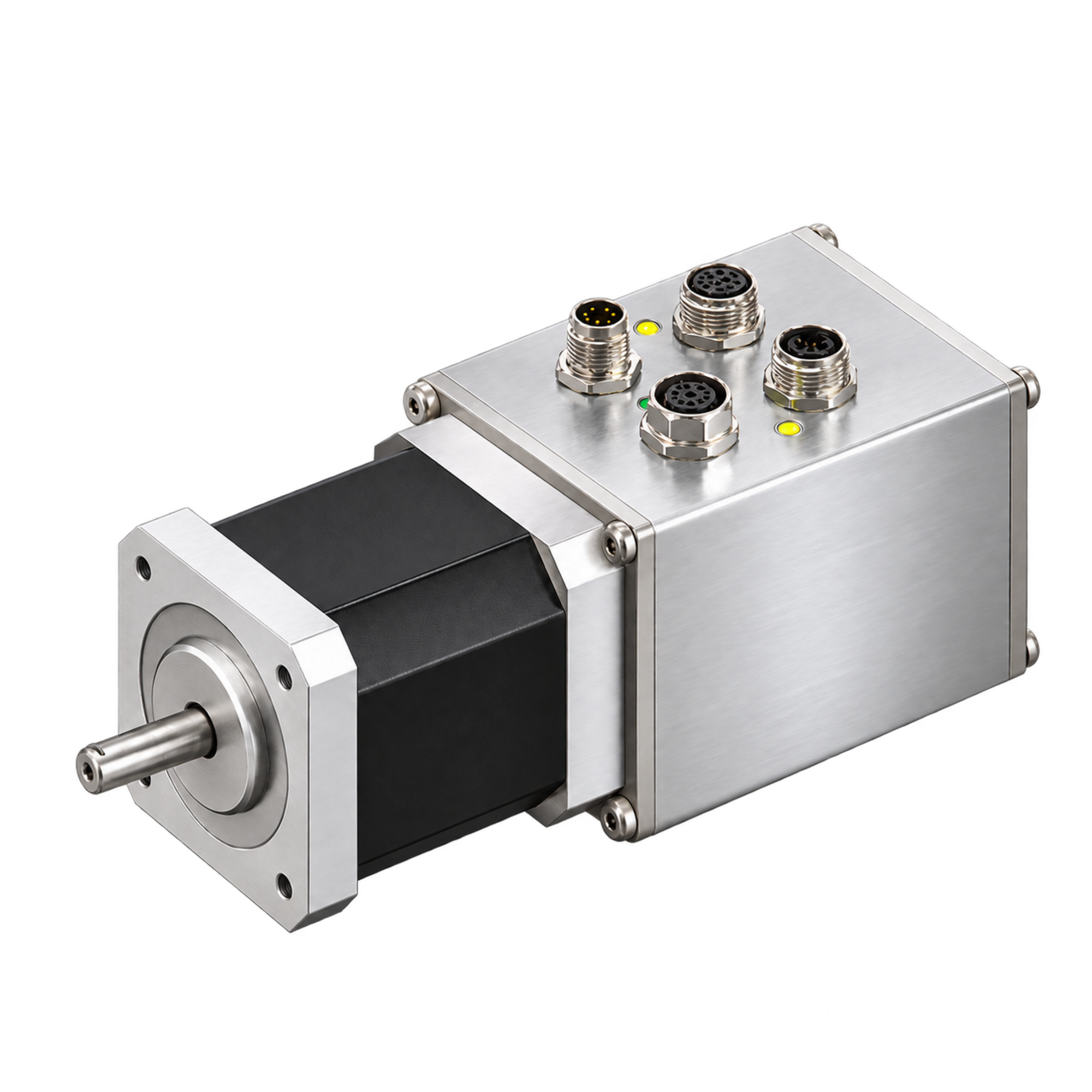
Colibri 17 4.0 INLINE
NEMA 17 stepper motor with integrated controller in an inline design
-
Holding torque: 0.5 Nm
-
Flange size: 42 × 42 mm
-
Design: Inline with radial or axial connections
-
Interfaces: PROFINET, EtherCAT, or EtherNet/IP, depending on the model
- Encoder: Incremental encoder, optional multiturn absolute encoder
The NEMA 17 stepper motor with integrated controller in an inline design is suitable for compact positioning axes and devices. Radial or axial M8 connections facilitate adaptation to the installation space and cable routing.

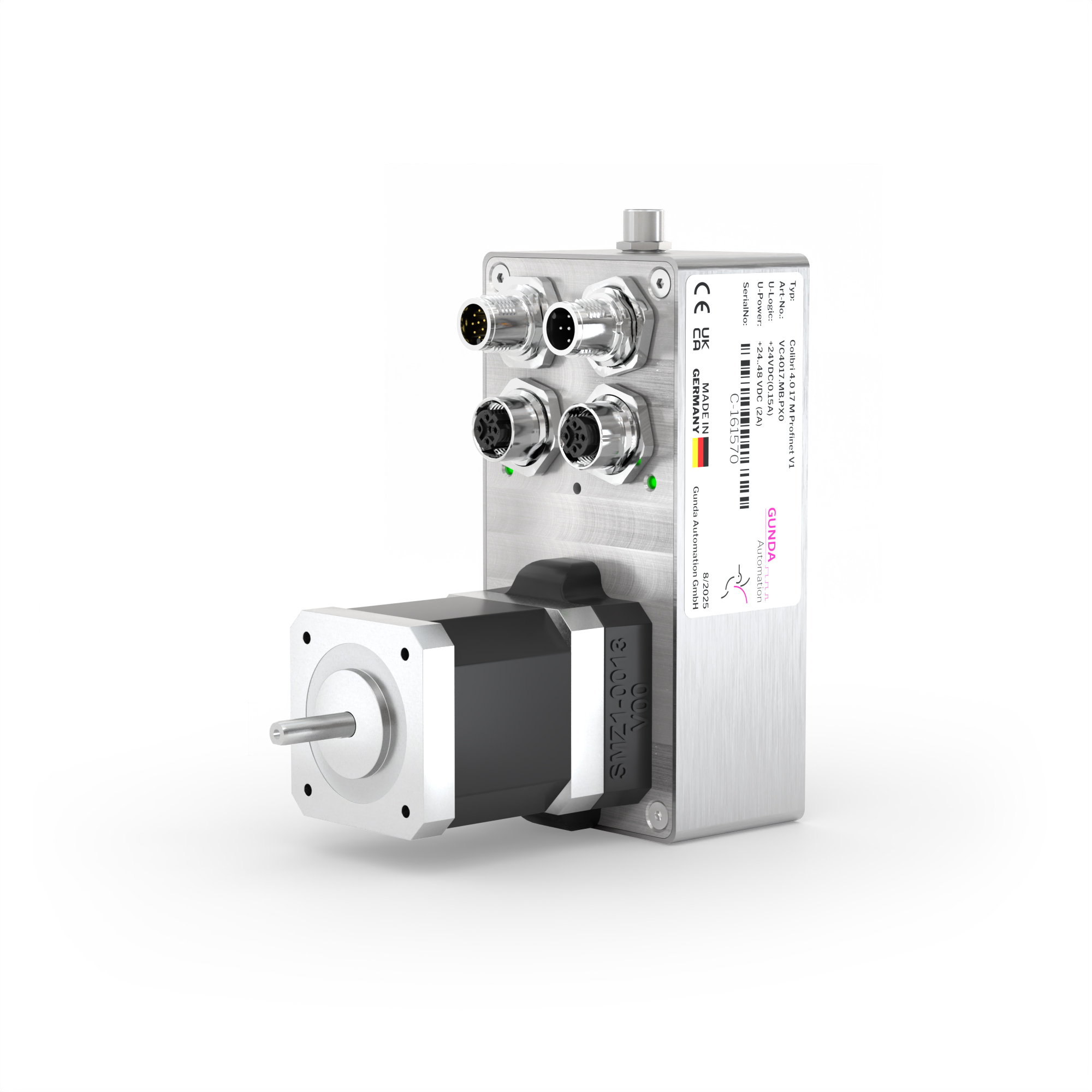
Colibri 17 4.0
Compact NEMA 17 stepper motor with integrated controller
-
Holding torque: 0.5 Nm
-
Flange size: 42 × 42 mm
-
Design: Top or rear connections
-
Interfaces: PROFINET, EtherCAT, EtherNet/IP, or CANopen, depending on the model
- Encoder: Incremental encoder, optional multiturn absolute encoder
- Safety: STO
The Colibri 17 4.0 combines a compact stepper motor with integrated positioning control and industrial communication. Different connection configurations allow for seamless integration into small machines, laboratory equipment, and positioning systems.
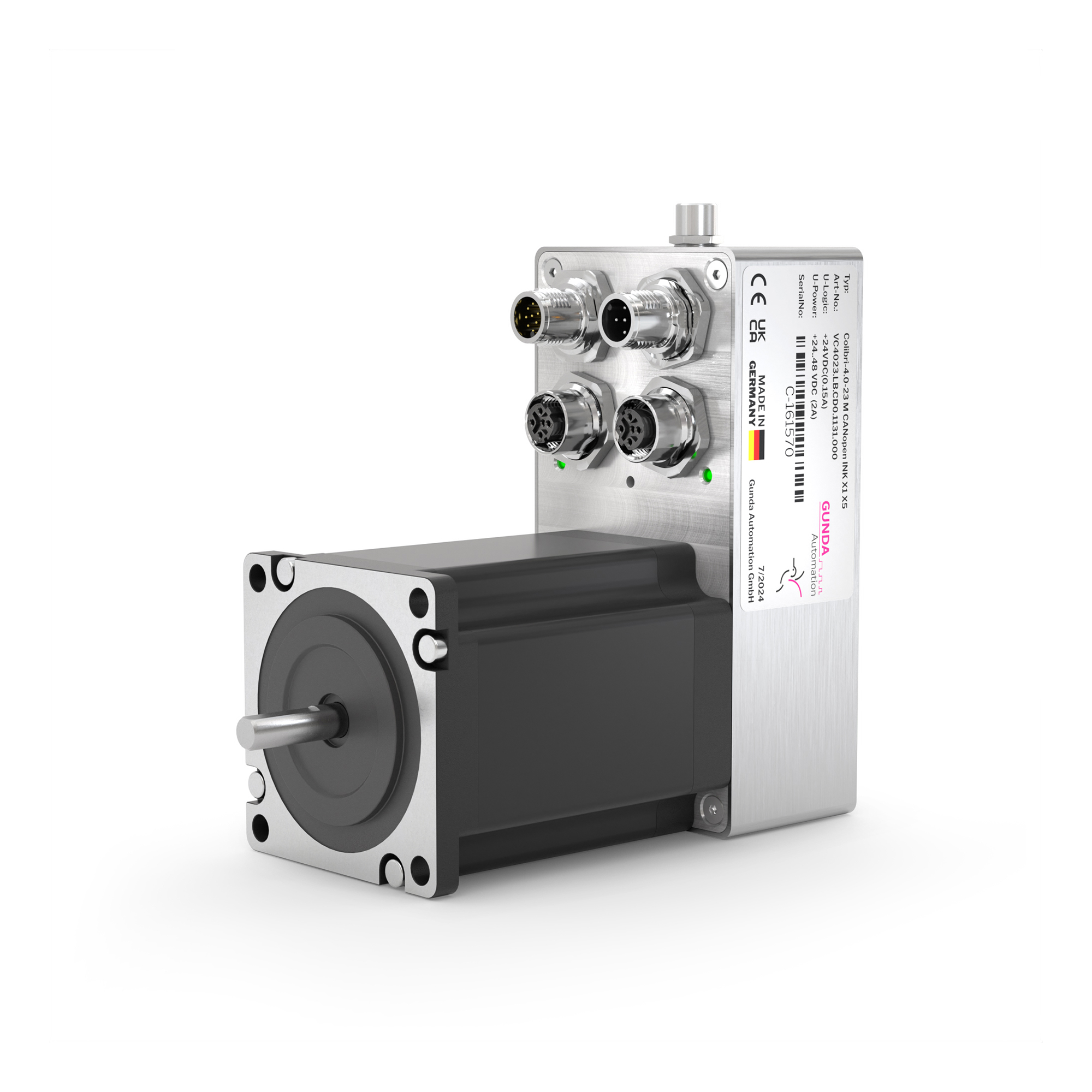
Colibri 23 4.0
NEMA 23 stepper motor with integrated controller up to 2 Nm
-
Holding torque: 0.6 / 1.2 / 2 Nm
-
Flange size: 57 × 57 mm
-
Design: Standard or compact housing
-
Interfaces: PROFINET, EtherCAT, EtherNet/IP, or CANopen, depending on the model
-
Encoder: Incremental encoder, optional multiturn absolute encoder
- Safety: STO
The NEMA 23 stepper motor with integrated controller is available in three motor lengths. This allows the drive to be tailored to torque requirements and installation space—for feeders, handling axes, and industrial positioning tasks.
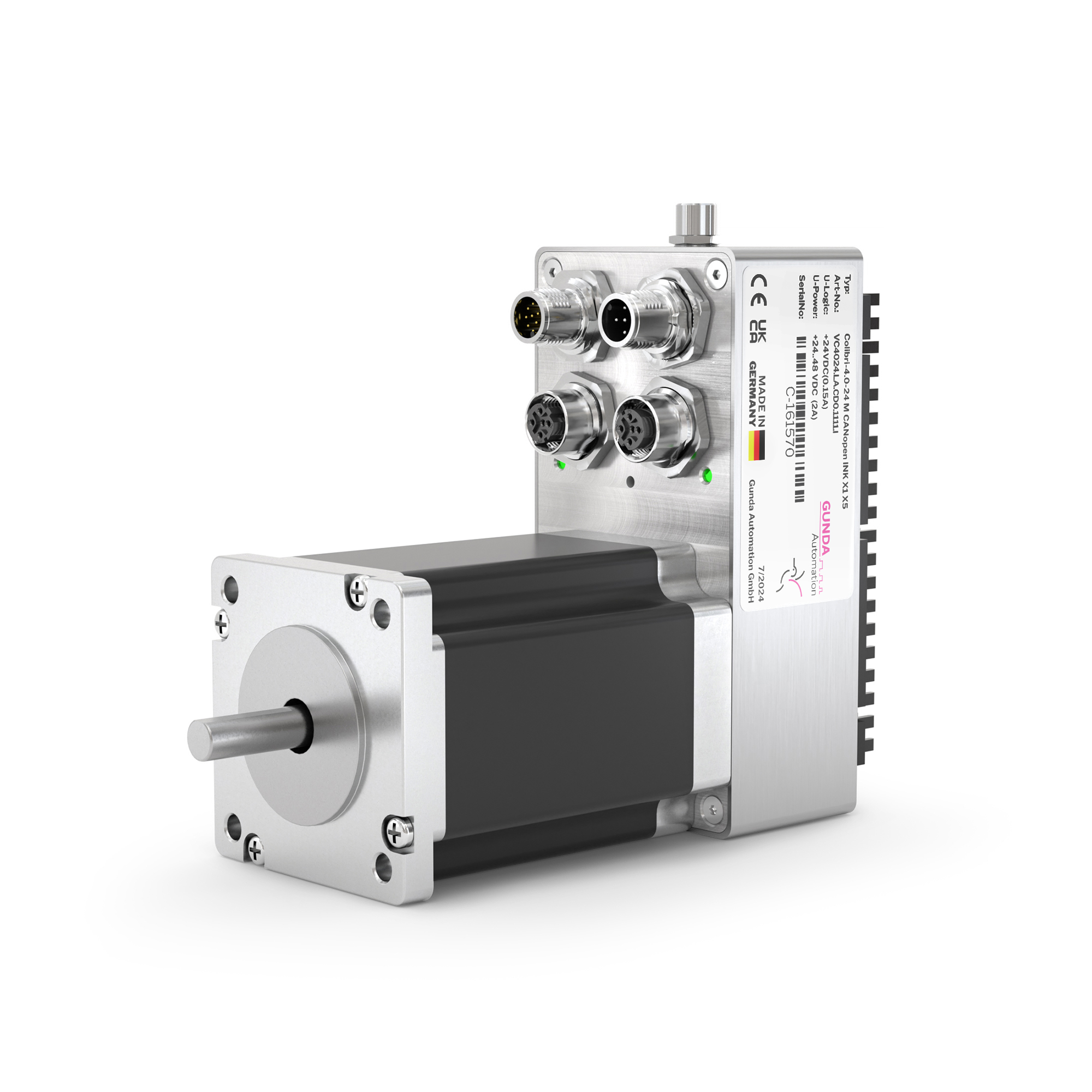
Colibri 24 4.0
NEMA 24 stepper motor with integrated controller and 3 Nm
-
Holding torque: 3 Nm
-
Flange size: 60 × 60 mm
-
Design: Standard housing
-
Interfaces: PROFINET, EtherCAT, EtherNet/IP, or CANopen, depending on the model
-
Encoder: Incremental encoder, optional multiturn absolute encoder
The Colibri 24 4.0 offers 3 Nm of holding torque in the NEMA 24 format. An integrated controller and M12 connectors simplify decentralized installation. A brake and gearbox are available as options for adaptation to the application.
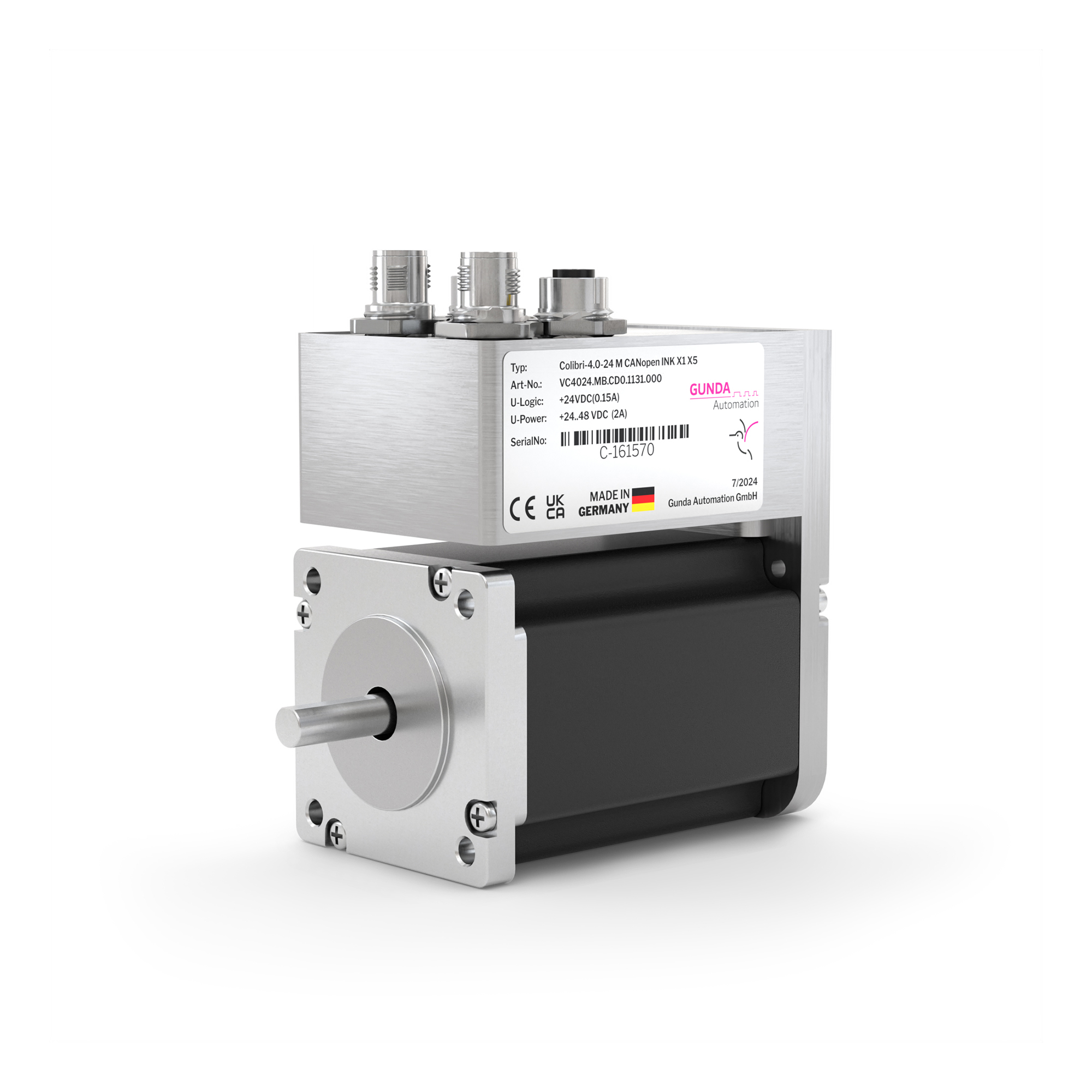
Colibri 24 4.0 COMPACT
NEMA 24 stepper motor with controller in a compact housing
-
Holding torque: 3 Nm
-
Flange size: 60 × 60 mm
-
Design: Compact housing
-
Interfaces: PROFINET, EtherCAT, EtherNet/IP, or CANopen, depending on the model
-
Encoder: Incremental encoder, optional multiturn absolute encoder
The compact version of the NEMA 24 stepper motor with integrated controller offers an alternative housing and connection configuration with 3 Nm holding torque. Choose this variant if its outer contour better fits your machine design.
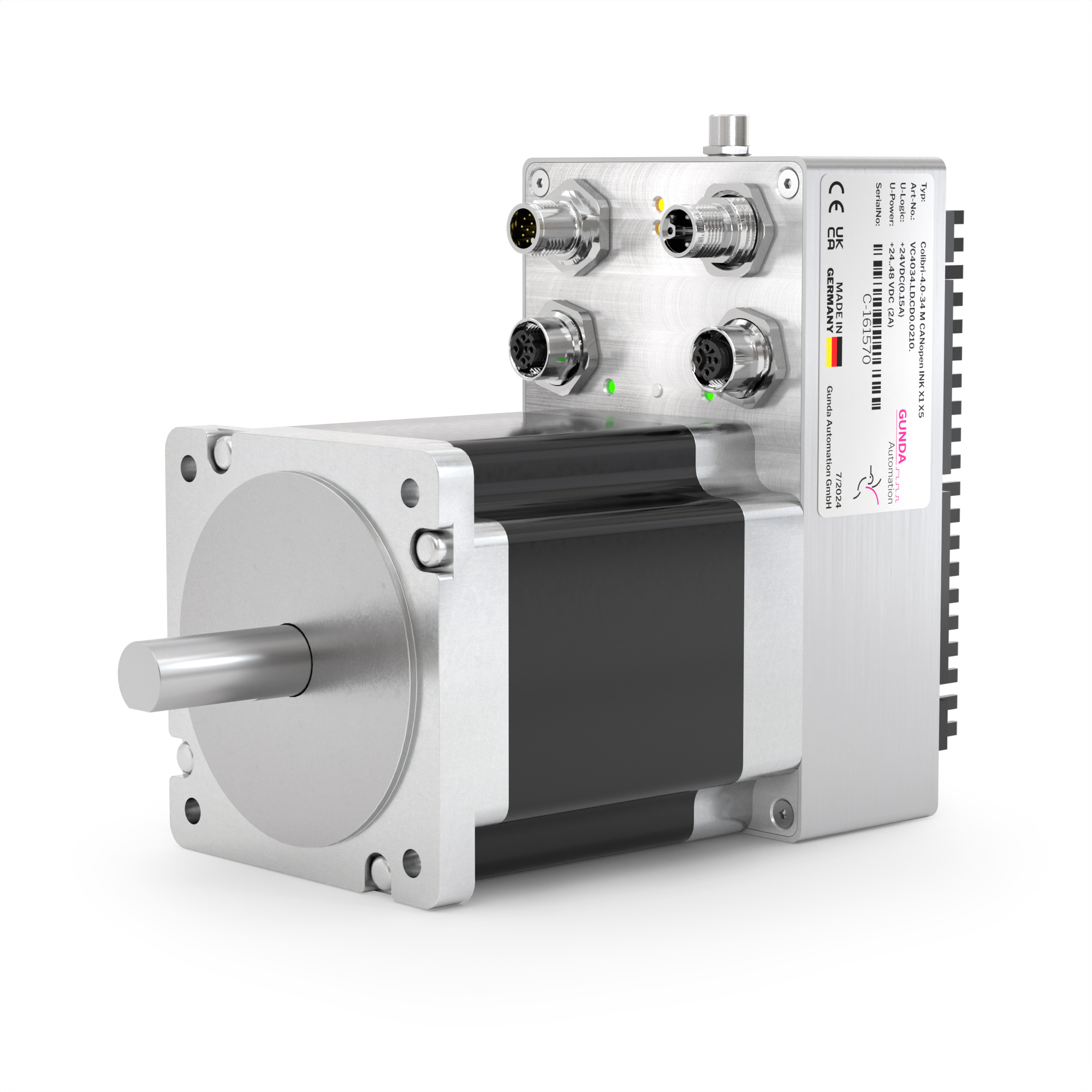
Colibri 34 4.0
NEMA 34 stepper motor with integrated controller up to 12 Nm
-
Holding torque: Up to 12 Nm
-
Flange size: 86 × 86 mm
-
Design: Multiple motor lengths and versions
-
Interfaces: PROFINET, EtherCAT, or EtherNet/IP, depending on the version
-
Encoder: Incremental encoder, optional multiturn absolute encoder
The NEMA 34 stepper motor with integrated controller is suitable for positioning and adjustment axes requiring higher torque. Different motor versions, as well as optional brakes and gearheads, allow for customization to match the load and motion profile.
Impressive features of the Colibri 4.0 series!
Integrated "
" controller
- Integrated positioning controller
- Power electronics integrated into the motor
- Compact all-in-one solution
- Decentralized machine architecture
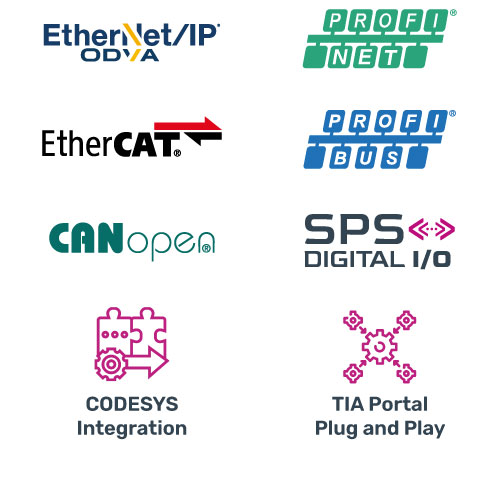
Industrial Ethernet & fieldbus
- Profinet
- EtherNet/IP
- EtherCAT
- CANopen
- TIA Portal Plug and Play
- Seamless CODESYS integration
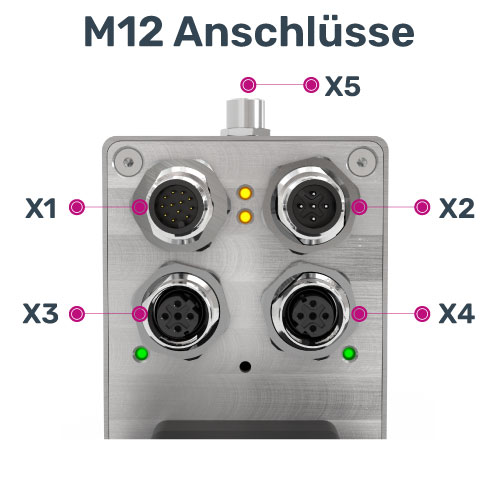
Industrial-grade design
- M12 industrial connectors
- Optional IP54
- Motor supply: 24–48 VDC
- Separate 24 VDC logic power supply
- Integrated reverse polarity protection
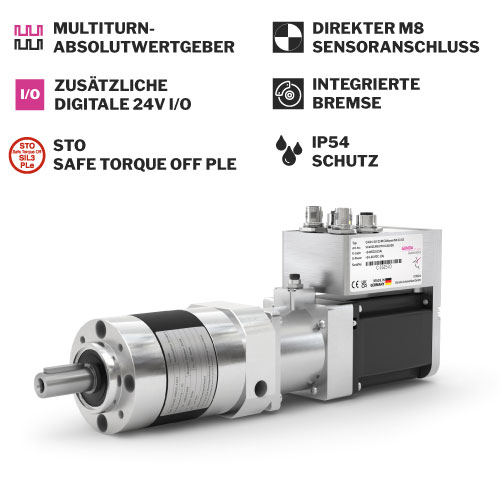
Optional extensions
- Brake
- Multiturn absolute encoder
- Planetary gearbox
- Digital 24V I/O
- Direct M8 connection for limit switches
- STO Safety Function SIL3
Our stepper motors with integrated control, developed and manufactured in Germany, are available in various sizes ranging from 0.5 Nm to 12 Nm. The compact and low-maintenance design is ideal for decentralized machine architectures, industrial direct drives, and precise positioning tasks in mechanical engineering and automation.
The motor is powered by 24 to 48 VDC, and the separate logic supply by 24 VDC, including reverse-polarity protection. Thanks to robust industrial connectors, an optional IP54 protection rating, and the ability to operate without forced ventilation at ambient temperatures up to 50 °C, these stepper motors with integrated control are ideally suited for demanding industrial environments.
The integrated stepper motors are optionally available with an absolute encoder, brake, planetary gearbox, and additional digital inputs and outputs, and can be optimally adapted to individual machine and automation solutions.
Our predecessor version, the Colibri 3.0, with simple basic I/O control (BAC) or a Profibus interface
In addition to the current Colibri 4.0 series, we continue to offer our proven Colibri 3.0 stepper motors with integrated control for existing machine designs and traditional automation applications.
The integrated BAC basic I/O control system enables the independent execution of motion and positioning sequences—either with or without an external PLC. Using the Colibri CFG tool, motion sequences can be easily configured without traditional programming. This makes the BAC systems ideal for simple, flexible, and quickly integrable positioning tasks.
In addition, the Colibri 3.0 stepper motors are also available with a Profibus interface. This variant is particularly well-suited for existing machines and systems with proven Profibus infrastructure and enables easy integration into existing automation systems.
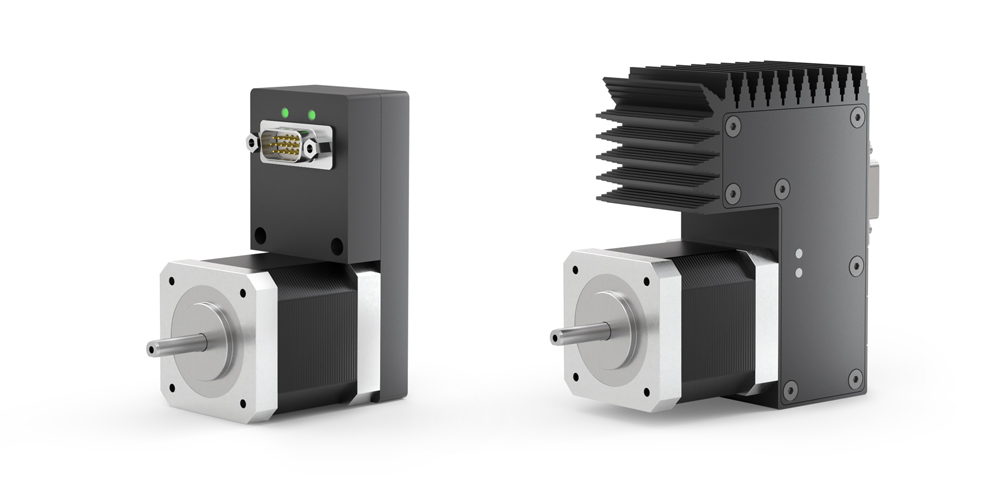
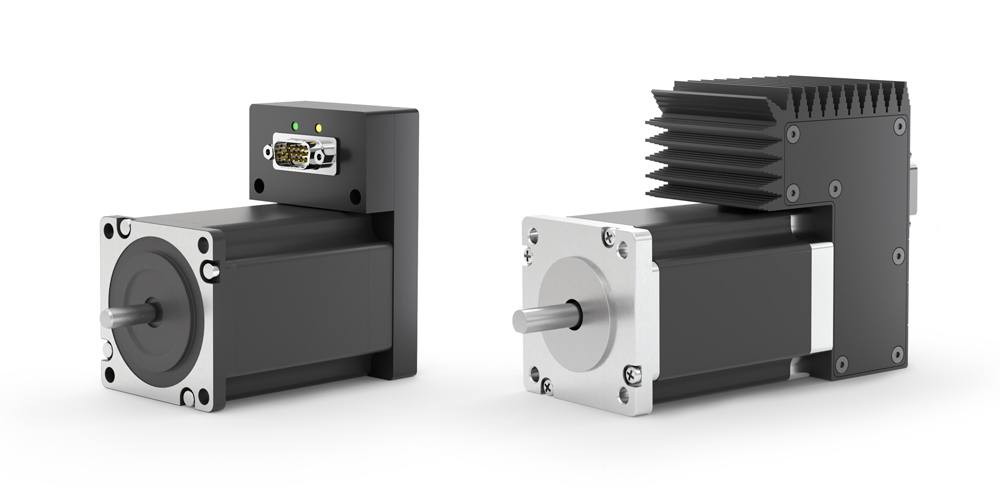
Colibri 17
NEMA17 stepper motor with controller
- Torque up to 0.6 Nm
- Flange size 42 × 42 mm
- BAC Storable motion data (PLC interface)
- Fieldbus: Profibus DP
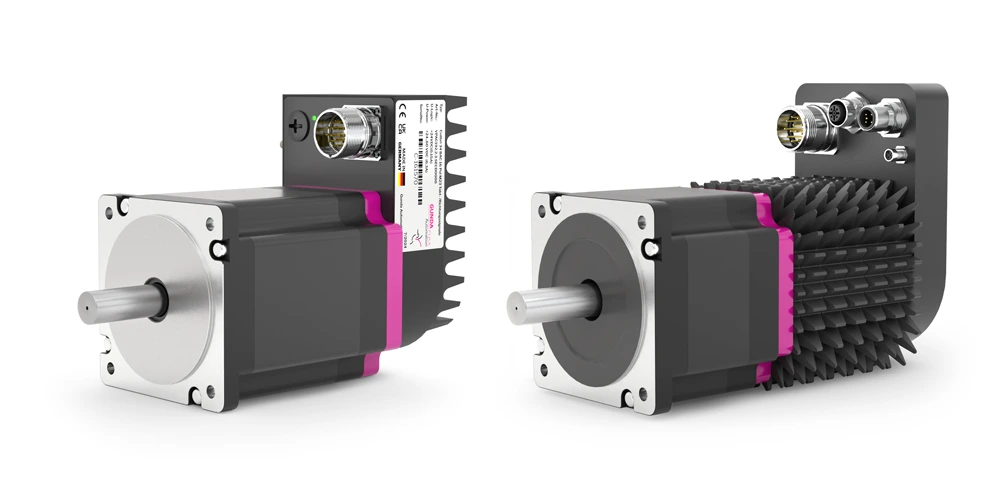
Colibri 23
NEMA23 stepper motor with controller
- Torque up to approx. 2 Nm
- Flange size 57 × 57 mm
- BAC: Storable motion data (PLC interface)
- Fieldbus: Profibus DP
Colibri 34
NEMA34 stepper motor with controller
- Torque up to 12 Nm
- Flange size 86 × 86 mm
- BAC Storable motion data (PLC interface)
- Fieldbus: Profibus DP
Stepper Motor with Gearbox – Maximum Precision and Performance
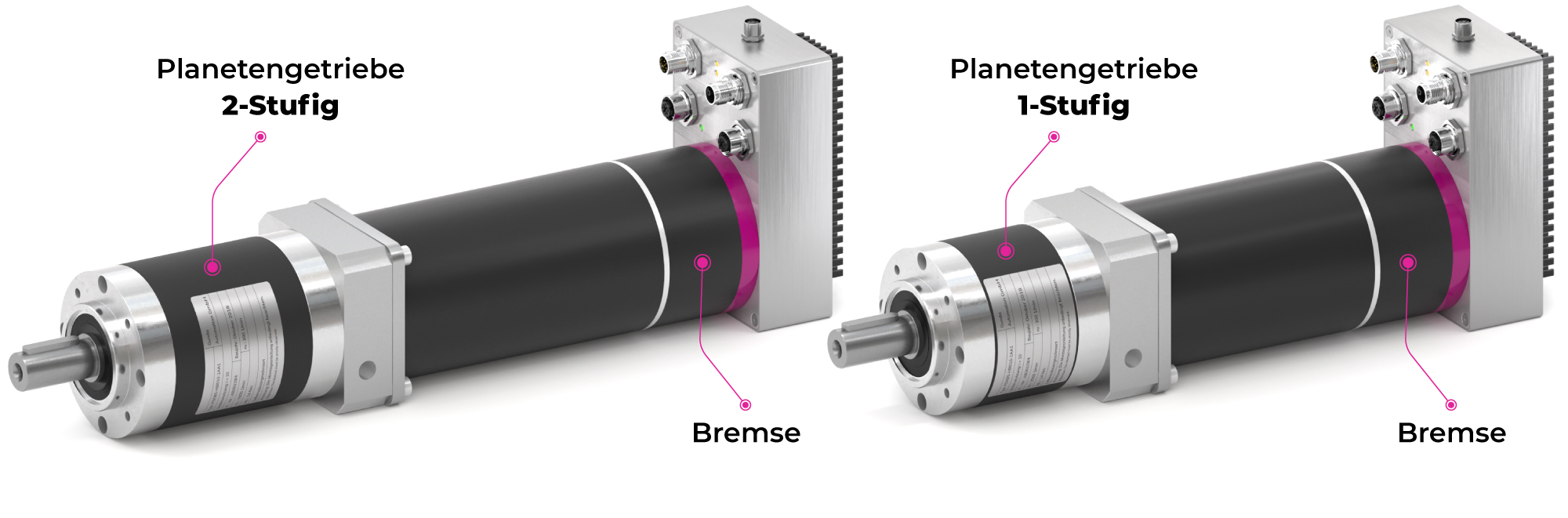
All of our stepper motors are also available as stepper motors with gearheads. The right gearhead for stepper motors allows for optimal adaptation to your application, increases torque, and ensures precise positioning. You can find our planetary gearheads here.
Whether it’s a geared stepper motor, a direct-drive stepper motor, or a stepper motor with a controller—you’ll always receive a perfectly tailored, compact drive solution.
Consulting and Selection
Learn more about our versatile stepper motors with integrated controllers. We’re happy to assist you in selecting the right stepper motor with a gearbox and controller for your application.
Servo Motors with Integrated Controllers as Intelligent Complete Solutions
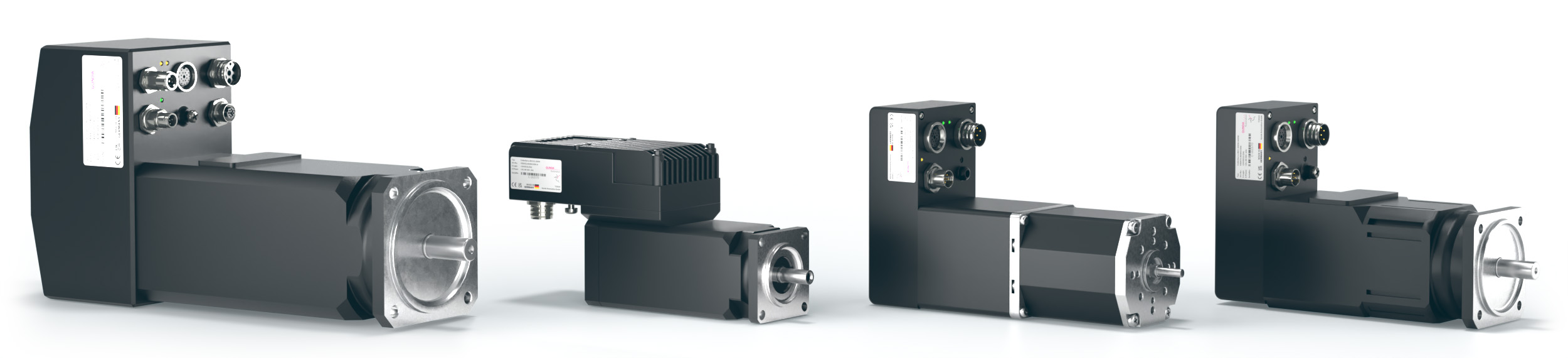
In addition to our stepper motors with controllers, we also offer compact servo motors with integrated controllers for highly dynamic and demanding positioning tasks.
The integrated servo drives combine the motor, controller, and power electronics into a single compact unit, enabling precise and energy-efficient motion sequences for modern machine and automation concepts.
Thanks to their compact design, the integrated servo motors reduce wiring effort, save space in the control cabinet, and simplify integration into industrial machines and decentralized axis systems.
Typical Applications for Stepper Motors with Integrated Control
Integrated stepper motors are used in a wide range of applications, including:
- Automation technology: In machines and production facilities where precise motion control is required.
- Medical devices: In systems that require precise positioning and control, such as in the dosing of medications.
- Integration into the higher-level control system can be easily achieved using available interfaces such as CANopen, Profi-Bus, Profinet, or EtherCAT.
- Overall, integrated stepper motors offer an effective solution for applications where space, efficiency, and ease of installation are important.
Which stepper motor with controller is right for your application?
Whether it’s a single-step motor, an integrated drive solution, or a custom design—we’ll help you select the right solution for your application.
Our entire team is working on innovative stepper motor controllers for your benefit.
Put us to the test!
Send us your inquiry—we’d be happy to assist you with your project.
ADVANTAGES OF OUR STEP MOTORS WITH INTEGRATED CONTROL
Compact Design
All essential components of the stepper motor with controller are housed in a single enclosure. This makes the entire assembly more compact and requires less space.
Easy Installation
Because the components are integrated, there is no need to install and wire separate drivers and controllers, which simplifies and speeds up installation and setup.
Reduced Wiring Effort
Less wiring means greater reliability and fewer potential points of failure. It also reduces electromagnetic interference (EMI) that can be caused by long cable runs.
Built-in Intelligence
Advanced features such as microstep operation, torque control, speed control, and fault diagnosis are built in.
Cost savings
Integration also helps reduce overall costs, as fewer separate components need to be purchased and assembled.
Simplified Maintenance
With fewer separate components, maintenance is often easier because there are fewer potential sources of error and problems can be diagnosed more quickly.
Properly Sizing Stepper Motors with Controllers Using the MotorFinder
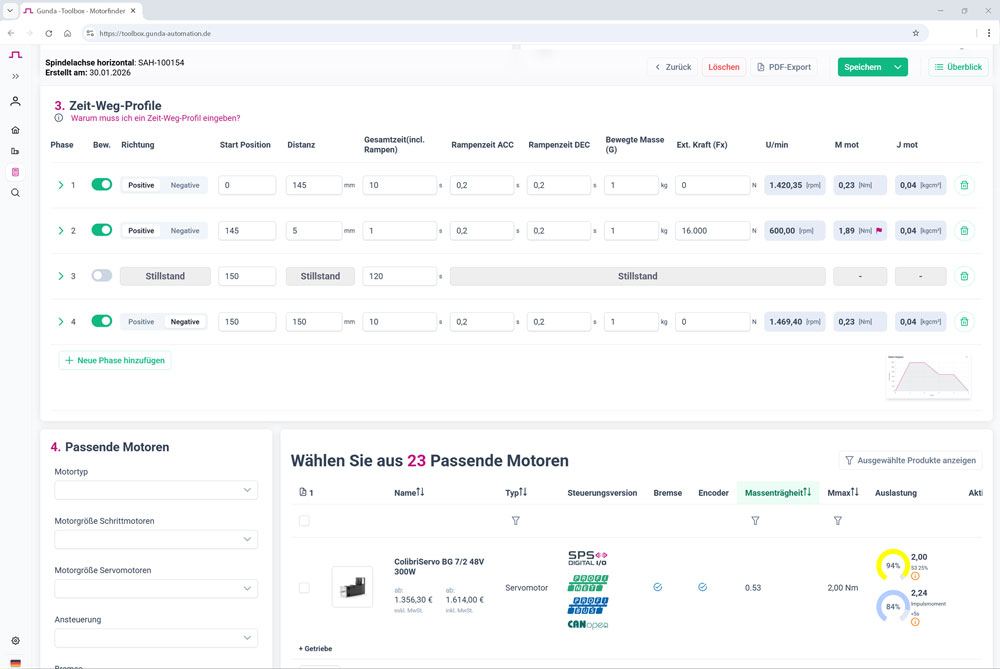
Gunda Automation’s MotorFinder helps you design stepper motors with integrated controllers, axis systems, and complete drive solutions. Using real motion data as well as defined masses and forces, suitable drives can be sized quickly, precisely, and transparently.
In just a few steps, the axis system, motion profile, and load data are entered. The tool then calculates suitable stepper motors with integrated controllers and clearly displays the results in a torque-speed curve.
In addition, the MotorFinder enables the analysis of accelerations, speeds, and motion profiles, as well as the selection of optimally matched drive solutions—optionally including gearboxes.
Thanks to integrated time-distance diagrams, project management, and PDF export, the MotorFinder is ideally suited for technical project planning in mechanical engineering and industrial automation.
Get started online now
Open MotorFinder in the Toolbox and create a robust design in just a few minutes—including visualization, load analysis, and export.
Go to MotorFinderColibri Studio 4.0
Configuration & Diagnostics for Colibri Drive Systems
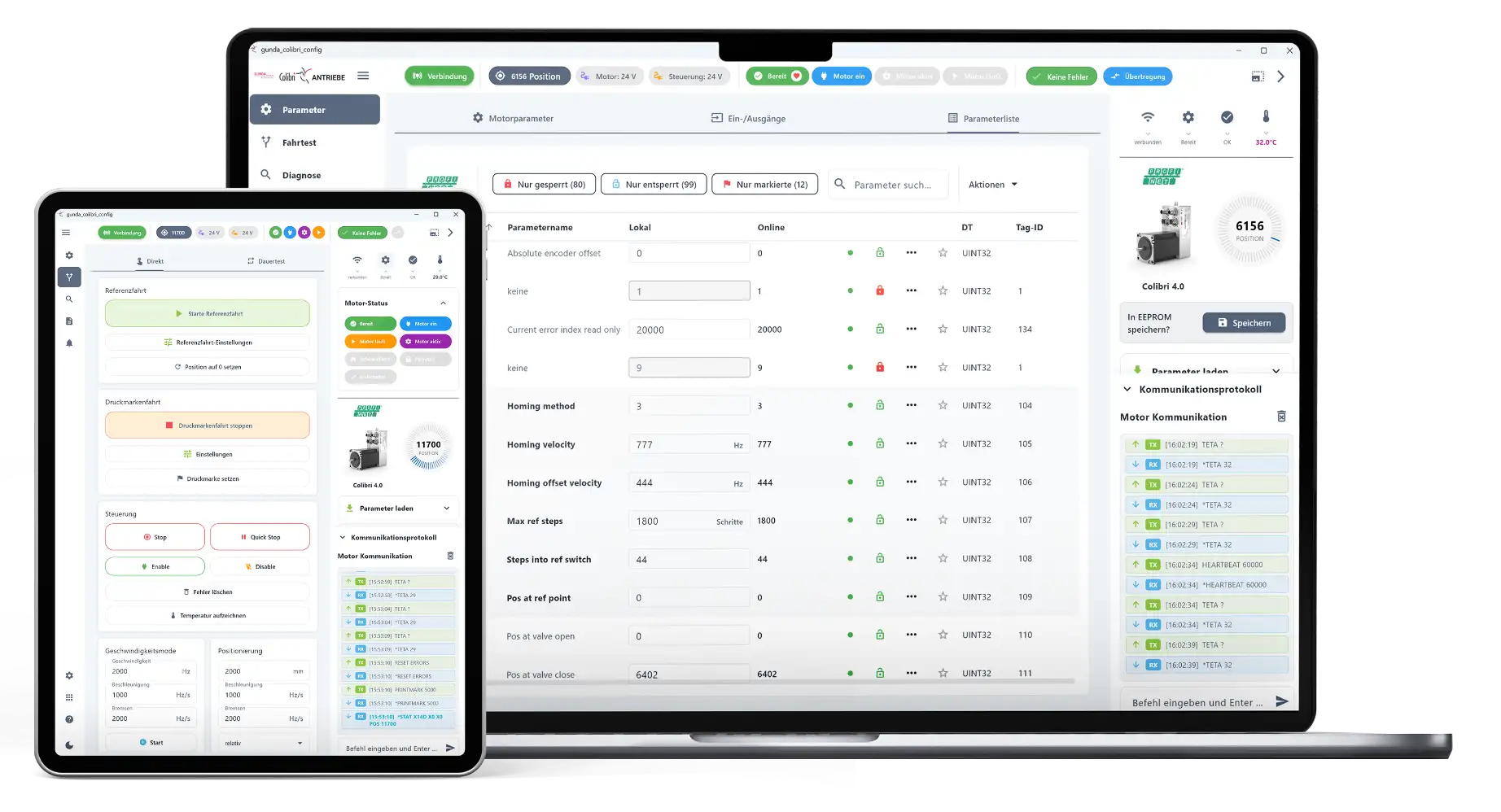
Colibri-Studio is free software for the industrial configuration, parameterization, and diagnostics of Colibri drives. Devices can be quickly connected via Ethernet or USB, parameters can be adjusted as needed, and configurations can be saved.
Ideal for mechanical engineering, service, and development, enabling efficient commissioning, reproducible device states, and structured drive tests in daily B2B use. Software from Ravensburg, Upper Swabia.
Frequently asked questions about stepper motors with integrated controllers
Our stepper motors with integrated controllers combine the motor, power electronics and positioning controller in one compact unit. Here we answer key questions about selecting, connecting, configuring and specifying Colibri drives.
What is a stepper motor with an integrated controller?
A stepper motor with an integrated controller combines the motor, power stage and positioning controller in one compact drive unit. A separate motor controller in the control cabinet is no longer required. Our Colibri drives also include an encoder for position detection or monitoring. Interfaces and functionality depend on the product series and version.
What are the benefits of integrating the controller directly into the motor?
The integrated controller reduces wiring between the motor and power electronics and saves control cabinet space. Motion functions are executed directly in the drive. This facilitates decentralized machine designs and provides a compact combination of motor, electronics and communication.
Which frame sizes are available for Colibri stepper motors?
The Colibri 4.0 series includes NEMA 17, NEMA 23, NEMA 24 and NEMA 34. An Inline version is also available for NEMA 17. Depending on the frame size, different motor lengths, torque ratings, housing versions and options are available. Selection depends on the mechanical and electrical requirements of the application.
How do I choose the right motor frame size?
Key factors include the required torque at the intended speed, load and inertia, acceleration, duty cycle and installation space. Holding torque alone is not sufficient for motor selection. The torque-speed curve and permissible axial and radial shaft loads must also be considered. MotorFinder supports drive sizing using motion and load data.
Which interfaces do the integrated stepper motors support?
Colibri 4.0 is available with PROFINET, EtherCAT or EtherNet/IP, depending on the frame size and version. CANopen is also documented for selected versions. Depending on the model, older Colibri series and BAC versions offer digital I/O, pulse/direction, RS485, CANopen or PROFIBUS-DP. Not every interface is available for every frame size; the selected device version determines availability.
Can Colibri drives be connected directly to a PLC?
Yes. With the appropriate communication interface, Colibri drives can be integrated directly into a PLC system. For example, Colibri 4.0 receives positioning commands and motion parameters via Industrial Ethernet. The drive executes the movement and returns status and diagnostic information. BAC versions can alternatively be controlled via digital I/O or pulse/direction.
How does the PROFINET connection to a Siemens PLC work?
TIA libraries and function blocks are available for the PROFINET version. The PLC sends control commands and motion parameters to the drive. The PROFINET manual describes functions including absolute and relative positioning, homing, jogging and stop commands. Status information, errors, actual position and actual speed are returned to the PLC.
How are Colibri 4.0 drives configured using a PC?
PC configuration is performed with Colibri Studio using the interface provided for the device version. The datasheets specify Ethernet TCP/IP with an ASCII protocol or USB, particularly for EtherCAT and selected CANopen versions. These interfaces allow parameter settings and support commissioning. Older documentation also refers to the configuration software as Colibri40 Config.
Is direct control from a PC possible?
Yes. The Colibri 4.0 datasheets also describe direct PC control via the respective configuration interface for simple laboratory and test applications. Appropriately equipped devices can use Ethernet TCP/IP with an ASCII protocol for this purpose. Monitoring mechanisms such as a heartbeat help supervise communication. Available commands and connection options depend on the device version.
Which supply voltages do the integrated stepper motors require?
The Colibri 4.0 drives described here use a separate 24 VDC logic supply and a 24–48 VDC motor supply. Different values apply to older BAC versions: for example, Colibri 23 BAC is documented with a 24–36 VDC control supply and a 24–48 VDC motor supply, while Colibri Kompakt 34 BAC uses 24–36 VDC and 24–60 VDC respectively. The nameplate and datasheet of the specific drive are always decisive.
What is the function of the integrated encoder?
The integrated encoder detects motor movement and enables position determination or monitoring. With the appropriate monitoring enabled, deviations between commanded and actual movement can be detected. Available responses and feedback depend on the controller and parameter settings. An encoder alone does not mean that every version operates with servo-style closed-loop control.
Are absolute encoders available?
Absolute encoders are offered as an option for various Colibri 4.0 versions, including multiturn encoders for several frame sizes. Availability depends on the frame size and device version. Whether homing is required and how the position is adopted after power-up depend on the encoder and configuration.
How does the BAC version differ from Colibri 4.0 with Industrial Ethernet?
The BAC version is suitable for positioning tasks using digital I/O, pulse/direction or optional RS485 communication. Depending on the operating mode, stored motion profiles can be selected or program sequences executed. Colibri 4.0 with Industrial Ethernet connects to the machine controller via PROFINET, EtherCAT or EtherNet/IP and exchanges motion commands, status values and diagnostic data via the respective interface.
When is an integrated stepper motor with a gearbox useful?
A gearbox is useful when a lower output speed or higher output torque is required. The transmission ratio also changes the load inertia reflected to the motor and the motion resolution at the output. Selection must take account of efficiency, backlash, permissible loads and the required positioning accuracy. Gearboxes are available as an option depending on the Colibri version.
Which connectors and IP protection ratings are available?
The Colibri 4.0 datasheets specify mainly M8 connectors for NEMA 17 and mainly M12 connectors for NEMA 23, NEMA 24 and NEMA 34. Additional sensor or I/O connectors are provided depending on the version. The devices described are documented with IP40 as standard and IP54 as an option. Connector configuration, IP rating and required mating connectors must be checked against the respective datasheet.
Are digital inputs and outputs and a brake available?
Additional 24 V digital inputs and outputs are provided for Colibri 4.0 depending on the version, for example for sensors or valves. A brake is also optionally available for various NEMA 23, NEMA 24 and NEMA 34 versions. No brake is specified for the NEMA 17 versions documented here. Equipment must be selected to suit the frame size and application.
Is the STO safety function available?
The Colibri 4.0 datasheets describe STO (Safe Torque Off) as an equipment-dependent option with two separate inputs. STO prevents the generation of motor torque. According to the supplied datasheet, the STO option for Colibri 4.0 NEMA 17 Inline is not planned to be available until 2027. Availability and safety-related specifications for the specific version must be checked against the associated STO documentation.
Which applications are suitable for stepper motors with integrated controllers?
Typical applications include positioning axes, feeding mechanisms, dosing systems, packaging machines, handling systems and laboratory automation. Integrated stepper motors are particularly useful where compact drives and decentralized installation are required. Suitability depends on the required torque, speed, dynamics and environmental conditions.